
First off, I should note that Jared is to thank for all of our traveling adventures. He is the navigator and an exceptional planner! He did a detailed search of sites he wanted to visit by checking out photos that people had posted on Google Earth. After knowing the location of each site or city he wanted to see, he then programmed it in to our GPS and marked it on our map on the route we would be taking. I let myself be surprised most days…saying “where are we going, now, Love?!” Without his dedication of a LOT of time and research, this trip would not have been possible! In fact, many of the places he took us to were not very well-known and not even well-marked with signs or talked about much in our guidebooks. Thanks for such great discoveries, honey!!
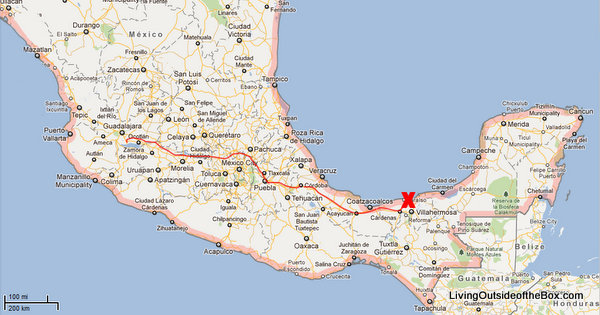
Day Two of our month-long adventure through the Yukatan was a Sunday, and we had arrived in the western side of the Mexican state of Tabasco. This area is famous for its Comalacalco Mayan ruins, which are famous because of their construction from bricks and/or mortar made from oyster shells. Comalcalco was apparently at its peak between AD 600 and 1000, and was an important center of commerce for centuries beyond that.
When we arrived, we expected to pay the customary small fee for entering the pyramid grounds ($35 pesos…about $3 each), but found that the attendants couldn’t take our money! Every Sunday Mexicans are invited to visit the pyramids at no cost, and since this is not a well-trafficked area by foreign tourists, they had closed up the cash box, and couldn’t open it to take our money. Fine by us!
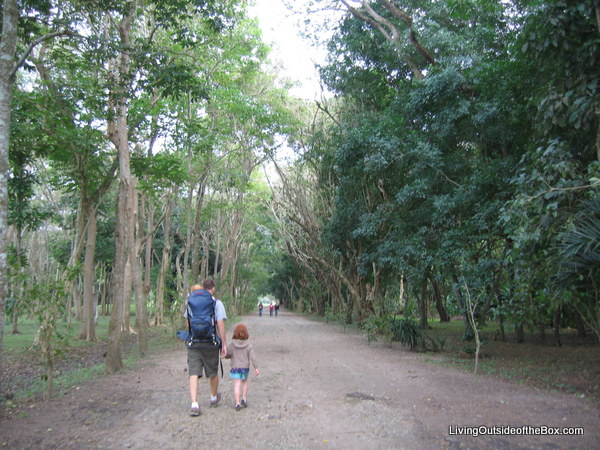
The entry was a long forested path…
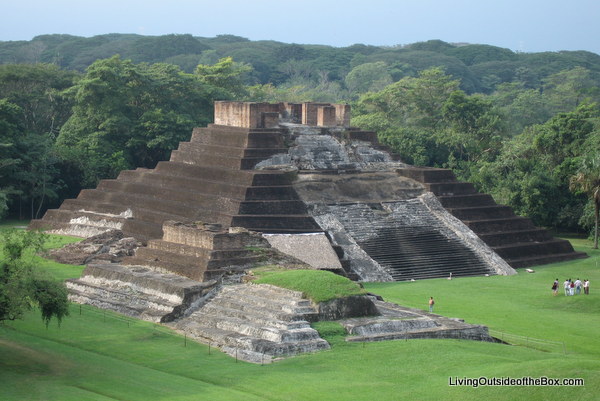
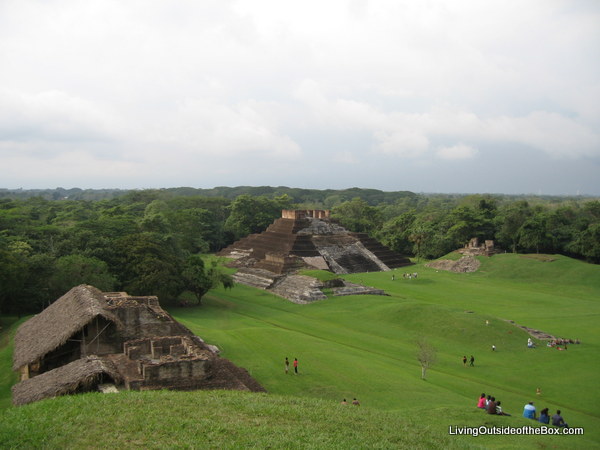
Imagine our surprise when the path opened to enormous grassy fields boasting of pyramids this size…
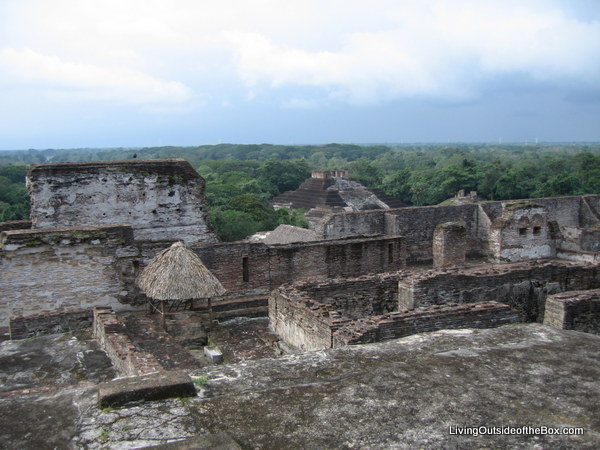
We climbed the hill leading up to another pyramid/palace to get an idea of how expansive the grounds were! It’s probably safe to say that most of the rolling hills in the photo are structures that haven’t been excavated.
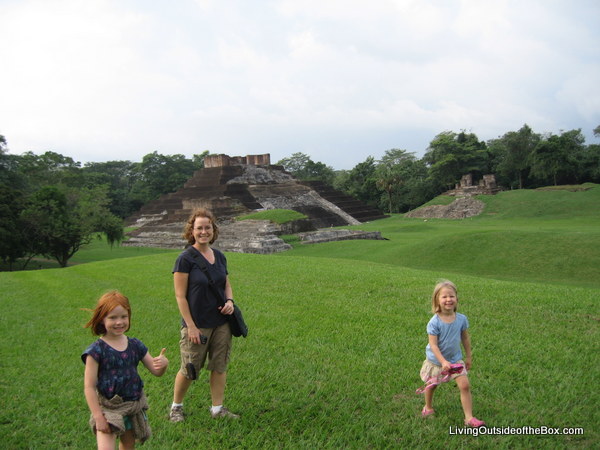
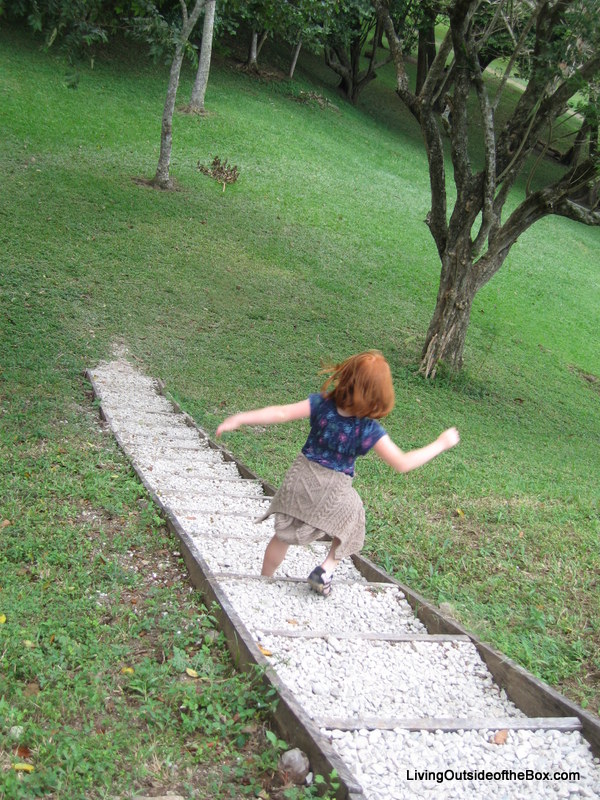
The girls immediately started rolling down the hills, and were terrifying me a bit since some of these hills were HUGE!
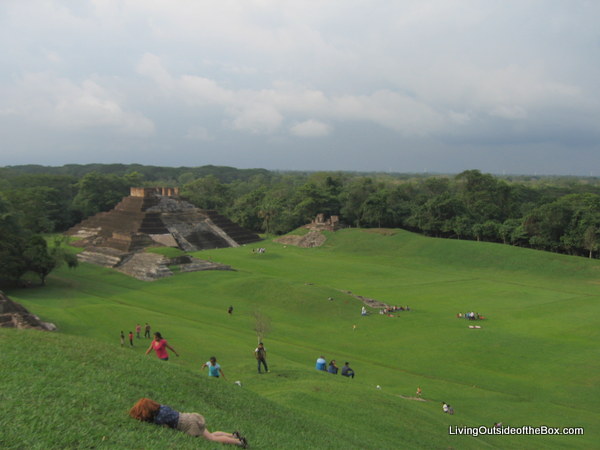
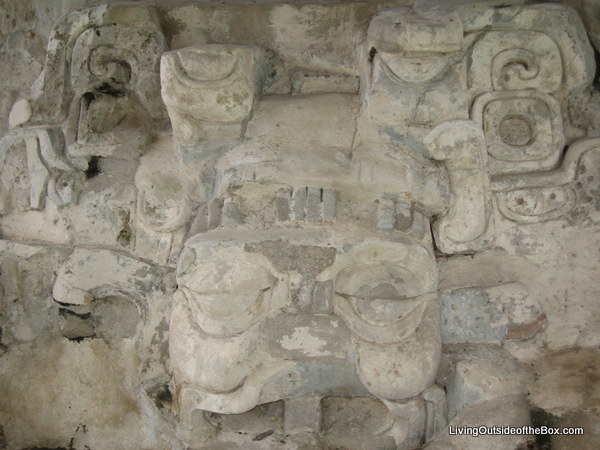
On the left is a smaller structure with palapas (palm-leaf thatched roof huts), that are not indicative of original building styles. The palapas have been built over parts of the ruins in an effort to protect some pretty spectacular carvings from the natural elements.
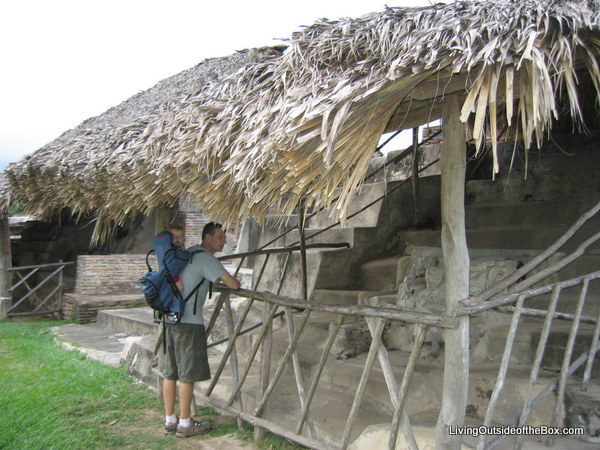
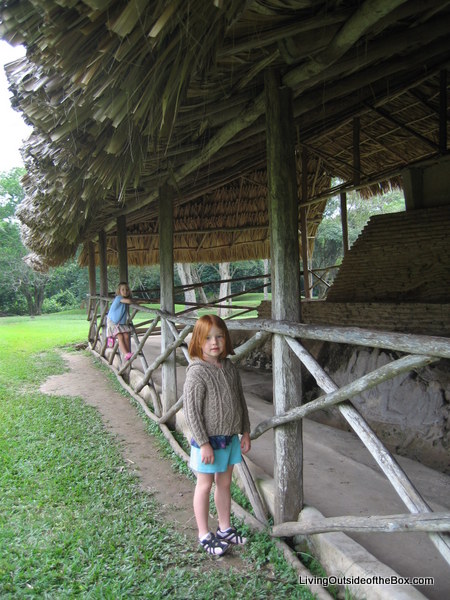
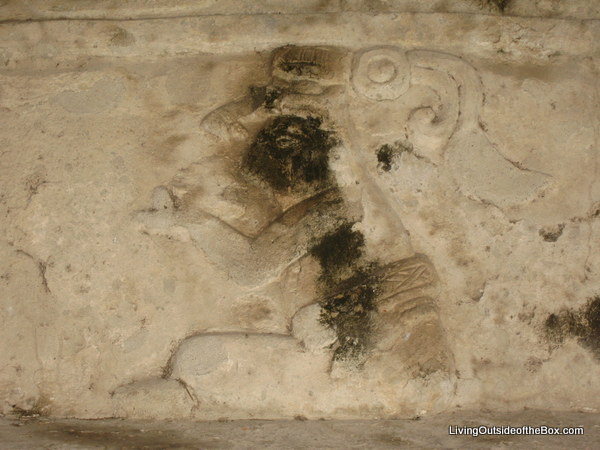
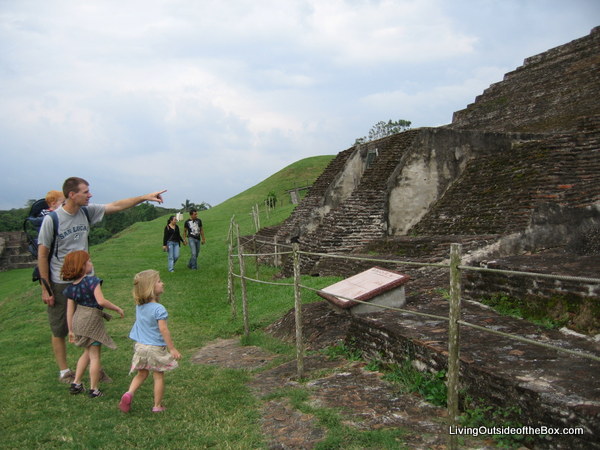
This site had informational placards in Spanish, French, and English–which we found to be fairly typical among well-excavated sites.
The Gran Acropolis of Comalacalco had a maze of rooms up top. I think in my mind I’ve always thought of pyramids as one-dimensional–simply a pyramid-shaped structure. But this trip opened my eyes to the fact that many of the ruins were important social buildings, and sometimes even dwellings. I can only imagine the kind of daily activities that took place!
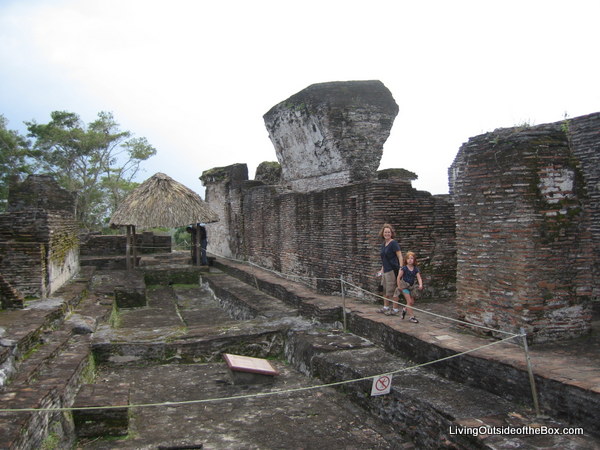
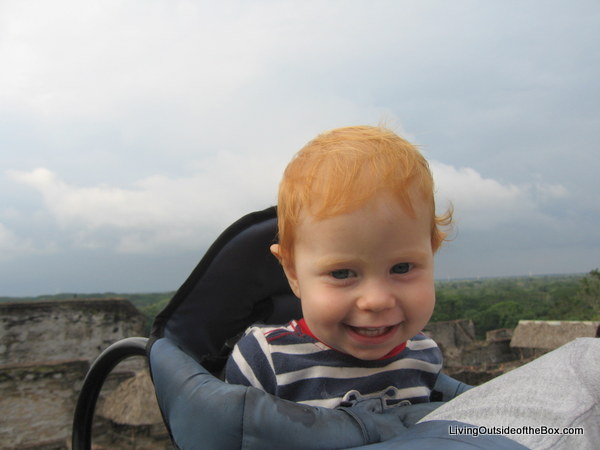
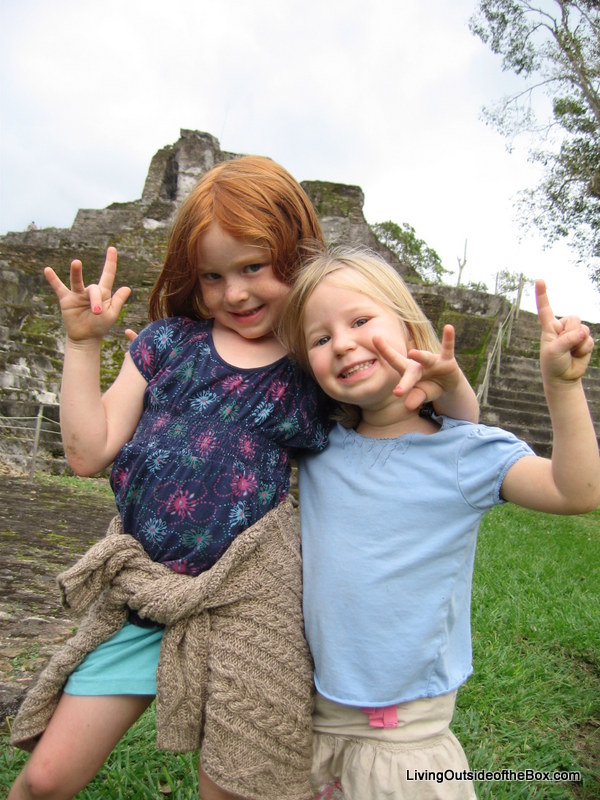
Pyramid #1? Cool!
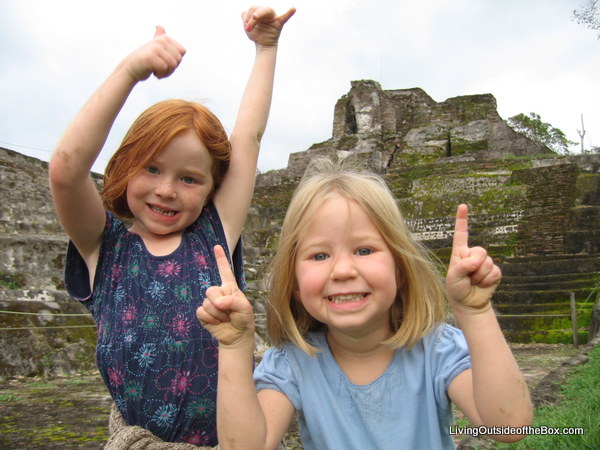
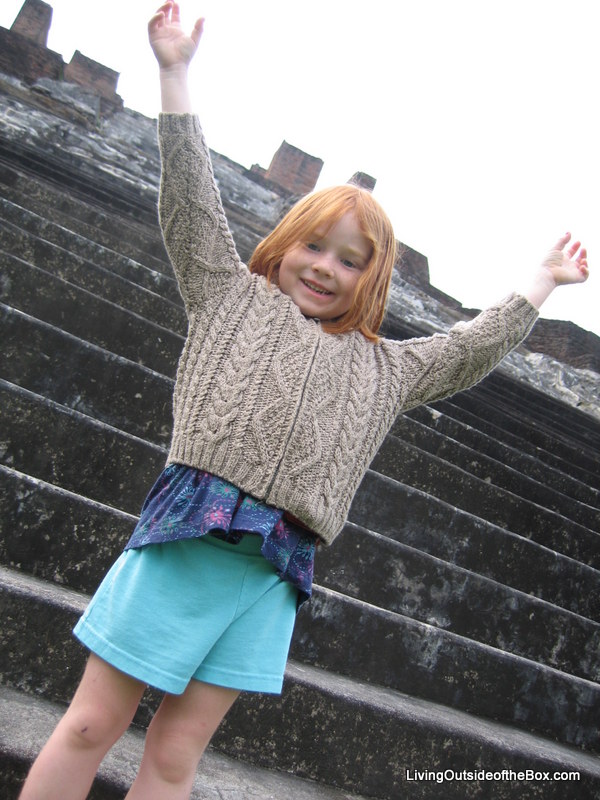
All in all, the Comalcalco ruins were a perfect start to our pyramid adventures over the next 27 days!
- Yukatan Road Trip Day 2 – Comalcalco Ruins




Comments 2